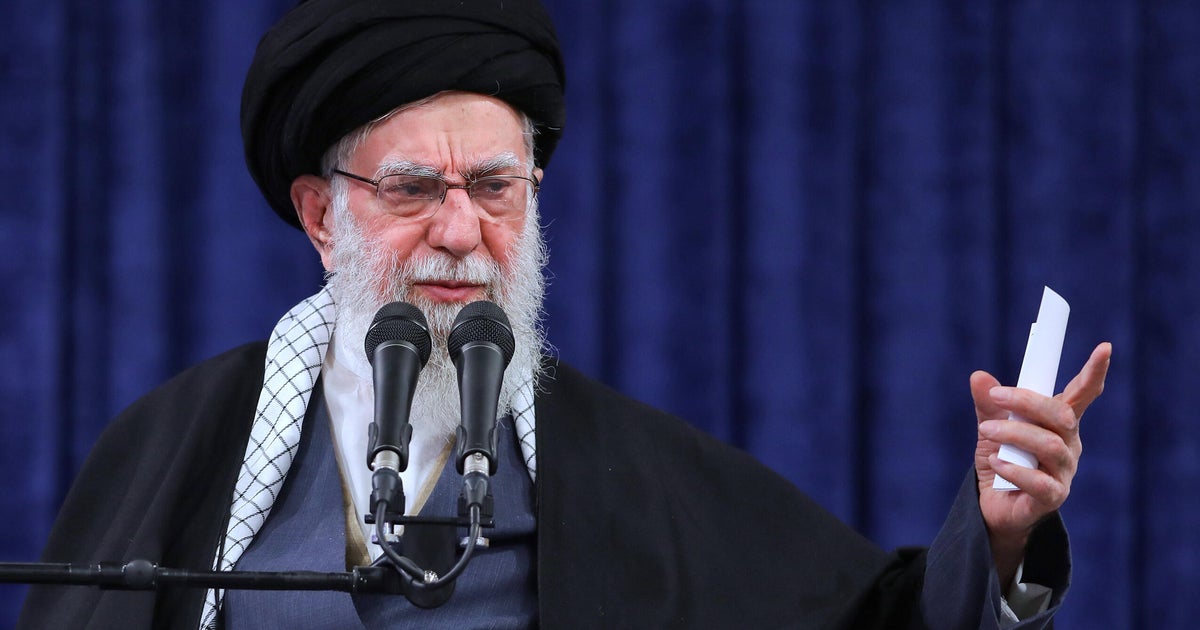
US-Israeli Intelligence: How Khamenei Was Tracked and Struck
The world held its breath as news broke of a precision strike in Tehran that ultimately claimed the life of Iran's Supreme Leader, Ayatollah Ali Khamenei. This unprecedented event, shaking the foundations of Middle Eastern geopolitics, was not the result of a sudden decision but the culmination of months of meticulous intelligence gathering and strategic collaboration. At the heart of this operation lay the sophisticated capabilities of the Central Intelligence Agency (CIA) and its close cooperation with Israeli counterparts, revealing the intricate dance of surveillance and targeted action. For those searching for how the CIA tracked Khamenei, or "cia rastrea jameneí," this article delves into the details of an intelligence triumph that reshaped regional power dynamics.
The Genesis of an Operation: Months of Tracking Khamenei
The successful strike on Ayatollah Ali Khamenei was a testament to sustained intelligence efforts. For several months leading up to the fateful Saturday, the CIA had been rigorously tracking Khamenei's movements and routines. This wasn't a casual observation but a deep dive into the elusive leader's habits, security protocols, and preferred locations. Intelligence collection of this magnitude involves a mosaic of sources and methods:
- Human Intelligence (HUMINT): Infiltrating networks and cultivating sources within the target country provides invaluable insights into leadership movements, meeting schedules, and internal discussions.
- Signals Intelligence (SIGINT): Intercepting electronic communications, from phone calls to encrypted messages, can reveal travel plans, meeting participants, and the overall rhythm of a leader's life.
- Geospatial Intelligence (GEOINT): Satellite imagery, drone surveillance, and other aerial reconnaissance methods offer real-time visual confirmation of movements, convoy routes, and the layout of secure compounds.
- Open Source Intelligence (OSINT): Even publicly available information, when carefully analyzed, can contribute to a broader understanding of a target's activities and patterns.
By diligently piecing together these fragments of information, the CIA built a comprehensive profile of Khamenei's whereabouts. This continuous surveillance allowed the agency to gain a "deeper insight into his whereabouts as he moved around," understanding not just where he was at a given moment, but his patterns, his secure locations, and even potential vulnerabilities. This painstaking process illustrates the dedication required for high-stakes intelligence operations. The ability to monitor such a heavily guarded and elusive figure highlights the immense resources and technical prowess at the disposal of US intelligence agencies. For a deeper dive into the technicalities of this surveillance, readers can explore CIA Intelligence Tracks Khamenei: Inside the Lethal Strike.
The Critical Juncture: Seizing a Fleeting Opportunity
The long months of tracking coalesced into a critical opportunity on a specific Saturday morning. The CIA's intelligence indicated that Khamenei was expected to attend a meeting of senior Iranian officials at a compound in Tehran. This was the moment the "cia rastrea jameneí" efforts had been building towards – a confluence of high-value targets in a single, confirmed location. Such an event is a rare occurrence for a leader as secretive and well-protected as Khamenei.
Upon confirming this crucial insight, the information was immediately relayed to Israeli counterparts. The collaborative relationship between US and Israeli intelligence agencies is deep-seated, built on years of shared threats and mutual strategic interests. This shared intelligence acted as the catalyst, "accelerating the timeline for a strike to capitalize on the opportunity." The window for such an operation is often narrow, requiring rapid decision-making, precise coordination, and the ability to act decisively. The speed with which the intelligence was processed and acted upon underscores the seamless communication and trust between the two nations' intelligence and military establishments. This swift, decisive action turned months of passive tracking into an active, lethal strike, demonstrating the agility required for covert operations against high-level adversaries.
The Strike and Its Immediate Aftermath: Unpacking the Geopolitical Fallout
The strike itself, an Israeli missile targeting Khamenei's compound in Tehran, sent shockwaves across the globe. Iranian state media confirmed Khamenei's death hours later, following an earlier announcement by President Trump, who referred to it as a "joint U.S.-Israeli operation." The immediate aftermath was marked by a mix of confirmation, denial, and strategic ambiguity from various official sources.
While President Trump openly acknowledged the operation, statements from other US officials provided nuanced perspectives. GOP Rep. Mike Turner, after speaking with Secretary of State Marco Rubio, clarified that the US "did not target Khamenei, and we were not targeting the leadership in Iran." This distinction is crucial in the complex world of international relations, often implying that while intelligence was shared, the final decision and execution of the strike itself lay with Israel, mitigating direct US responsibility for targeting a head of state. However, Sen. Tom Cotton, chairman of the Senate Intelligence Committee, while refraining from sharing specific intelligence details, emphasized the "exquisite intelligence collection methods" of the US and Israel, stating that "our nations have capabilities that no other nation on Earth has." This highlights the significant role US intelligence played, even if the final trigger was pulled by an ally.
Khamenei's death marked the end of an era. Having served as Supreme Leader since 1989, he held ultimate political and military power, consolidating authority across all branches of government and the armed forces. His nearly 40-year rule shaped modern Iran, following the legacy of Ruhollah Khomeini. The immediate question following his death was succession, a critical issue for Iran's stability and future direction. The vacuum left by such a long-serving leader immediately sparked questions about succession, a topic further explored in Khamenei's Death: Unpacking Iran's Leadership Succession Crisis.
Beyond the Strike: The Sophistication of Modern Intelligence
The operation to track and strike Ayatollah Ali Khamenei serves as a powerful demonstration of the extraordinary sophistication of modern intelligence agencies. It underscores several critical aspects of contemporary espionage and counter-proliferation efforts:
- Persistent Surveillance: The ability to maintain covert surveillance on high-value targets for extended periods, adapting to their security measures and changing routines, is a hallmark of elite intelligence agencies. This goes far beyond mere snapshots; it's about understanding an entire operational rhythm.
- Intelligence Fusion: The success wasn't due to one perfect piece of information but the seamless integration of various intelligence disciplines – HUMINT, SIGINT, GEOINT, and OSINT – into a cohesive, actionable picture. This fusion provides redundancy and validation, minimizing the risk of error.
- Strategic Partnerships: The depth of cooperation between the US and Israeli intelligence communities was paramount. Sharing sensitive, real-time intelligence allowed both nations to leverage their respective strengths and capitalize on fleeting opportunities. This kind of trust and interoperability is built over decades.
- Rapid Analysis and Dissemination: In high-stakes situations, the speed at which raw intelligence is analyzed, assessed for accuracy, and then disseminated to decision-makers can be the difference between success and failure. The rapid relay of information about the Saturday meeting exemplifies this critical capability.
- Implications for Adversaries: This operation sends a stark message to state and non-state adversaries: even the most protected leaders are not beyond the reach of "exquisite intelligence collection methods." It forces a re-evaluation of security protocols and leadership exposure, creating a deterrent effect.
The precise identification of Khamenei's location and intentions, and the subsequent strike, showcased capabilities that truly set these nations apart. It highlights the ongoing, high-stakes game of cat and mouse played between intelligence agencies and their targets, where technological advancement and human ingenuity continually push the boundaries of what is possible in the shadows of international power.
The successful tracking and strike against Ayatollah Ali Khamenei stands as a pivotal moment in the history of US-Israeli intelligence cooperation and global counter-terrorism efforts. It brought to light the sophisticated, multi-faceted nature of modern intelligence gathering, demonstrating how the tireless efforts of agencies like the CIA, in effect, "cia rastrea jameneí" or tracks Khamenei, can culminate in decisive action. This operation underscored the immense capabilities of the US and Israel, their ability to gather "exquisite intelligence," and to act with precision and speed on critical information. As Iran navigates a post-Khamenei era, the ripple effects of this intelligence triumph will undoubtedly continue to shape regional dynamics and serve as a testament to the power of strategic intelligence in a complex world.